Campus smart microgrid
We are building a smart microgrid across our campus to make it more efficient, reliable and sustainable, and to give researchers a real grid to experiment on.
- Solar today
- 423 kWp rooftop PV
- Controllers
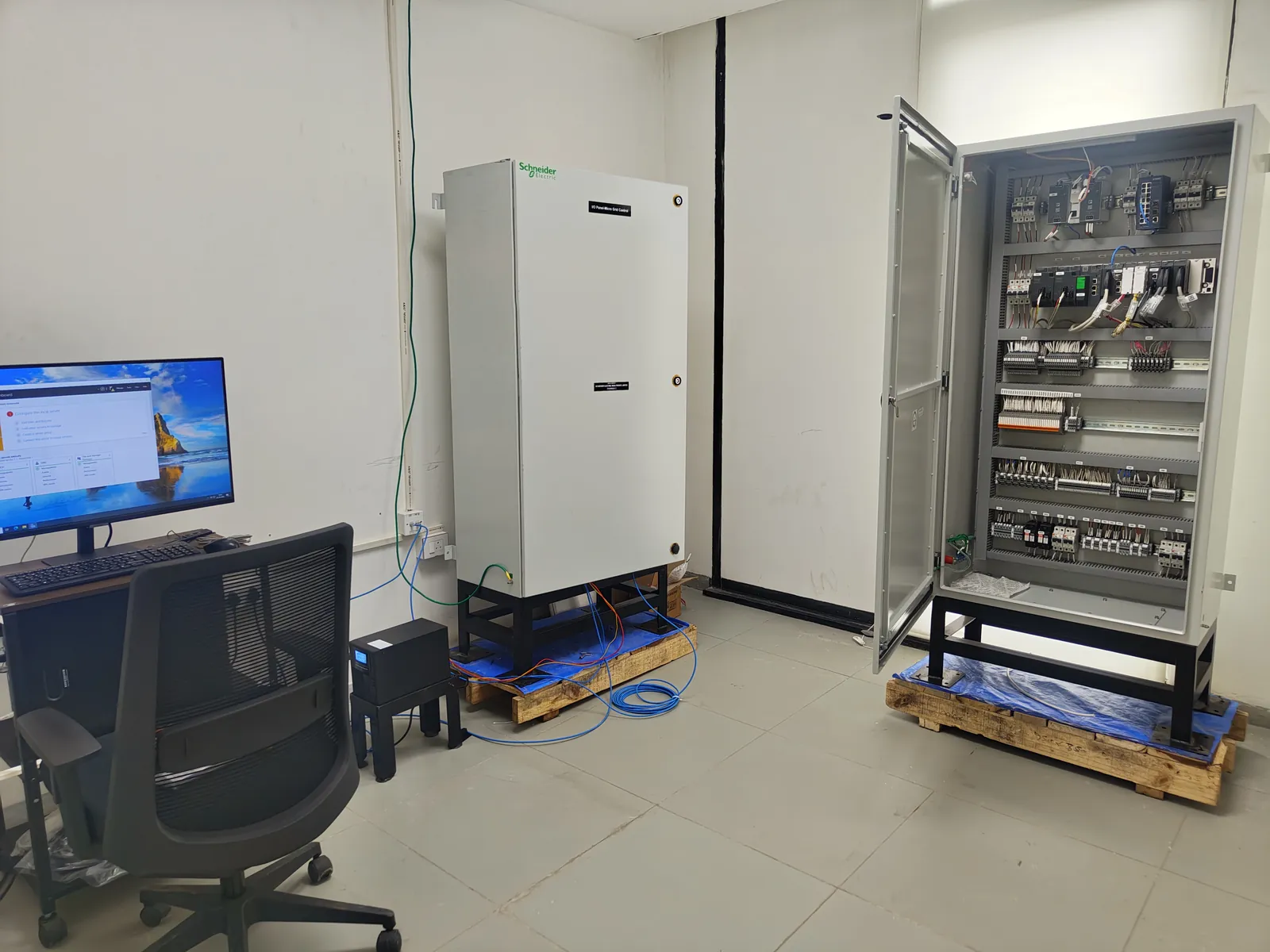
- 2 Schneider Electric PAC panels, Modicon M580
- Aligned with
- Ministry of Power's India Energy Stack
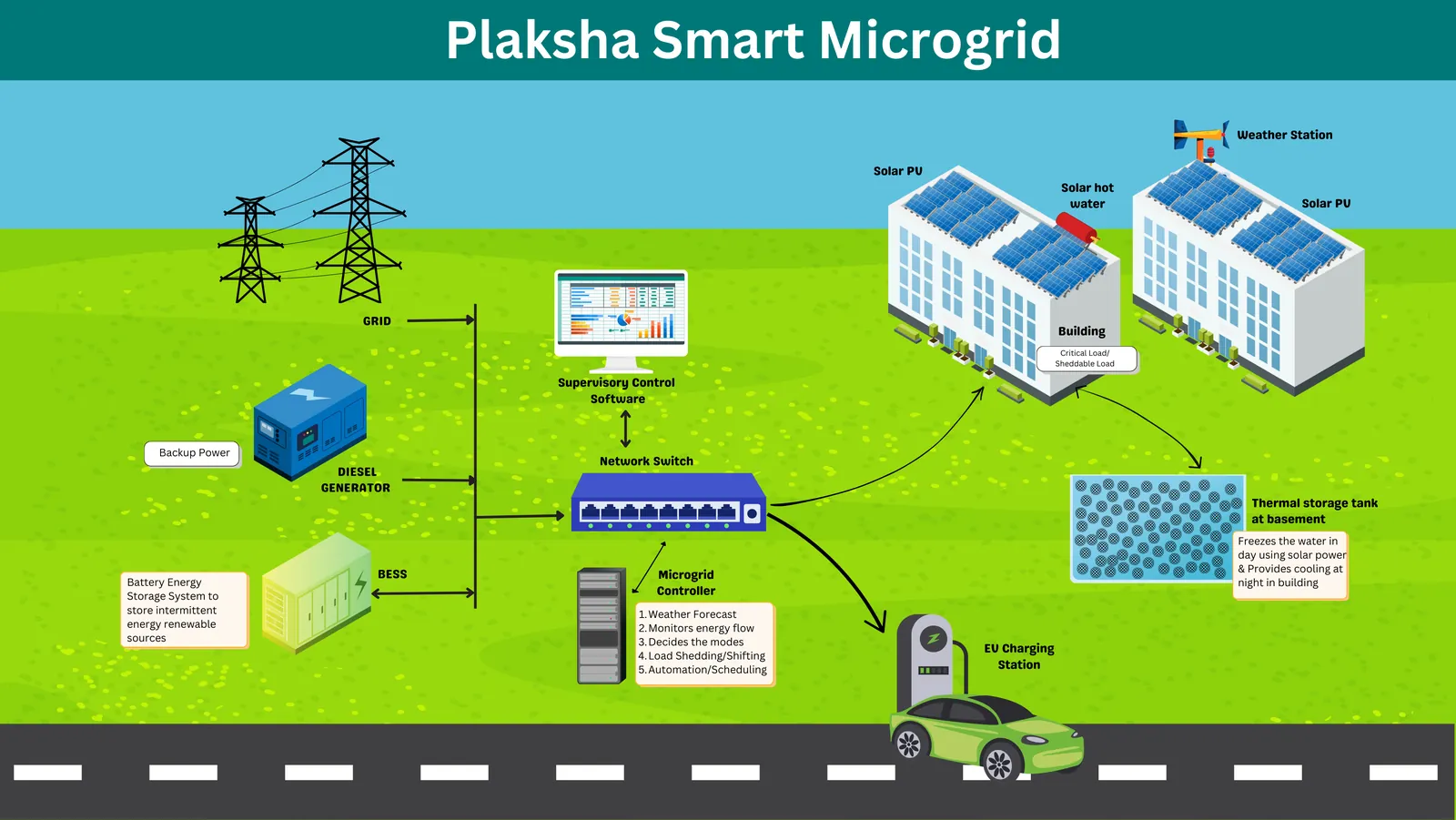
The microgrid integrates distributed energy resources, including rooftop solar PV, energy storage and controllable loads, to meet campus demand while reducing dependence on the utility grid and diesel generators. Designed as a living lab, it supports research, innovation and teaching in sustainable energy, and produces real operating data.
Digital by design
The project follows the Ministry of Power's India Energy Stack (IES) vision. It builds digital intelligence into the microgrid to explore interoperable, secure and scalable energy systems that enable demand-side flexibility, peer-to-peer energy exchange and integration with national digital energy platforms.
Progress so far
- The architecture is finalised. A detailed campus energy audit is under way to find inefficiencies that the microgrid should fix.
- Two Programmable Automation Controller (PAC) panels from Schneider Electric, each with a Modicon M580 controller, are the supervisory and control backbone. They enable SCADA-based central monitoring and MODBUS communication across subsystems.
- We have gathered the data needed for design: historical campus electricity use, utility bills, diesel generator performance, building management system signal lists and electrical design documents.
- Integration of the microgrid controller with the campus is in progress.
What comes next
The full testbed will combine battery storage, smart building controls, solar hot water, thermal storage, co-generation, a DC grid, solar and wind generation, and vehicle-to-grid charging for electric vehicles.
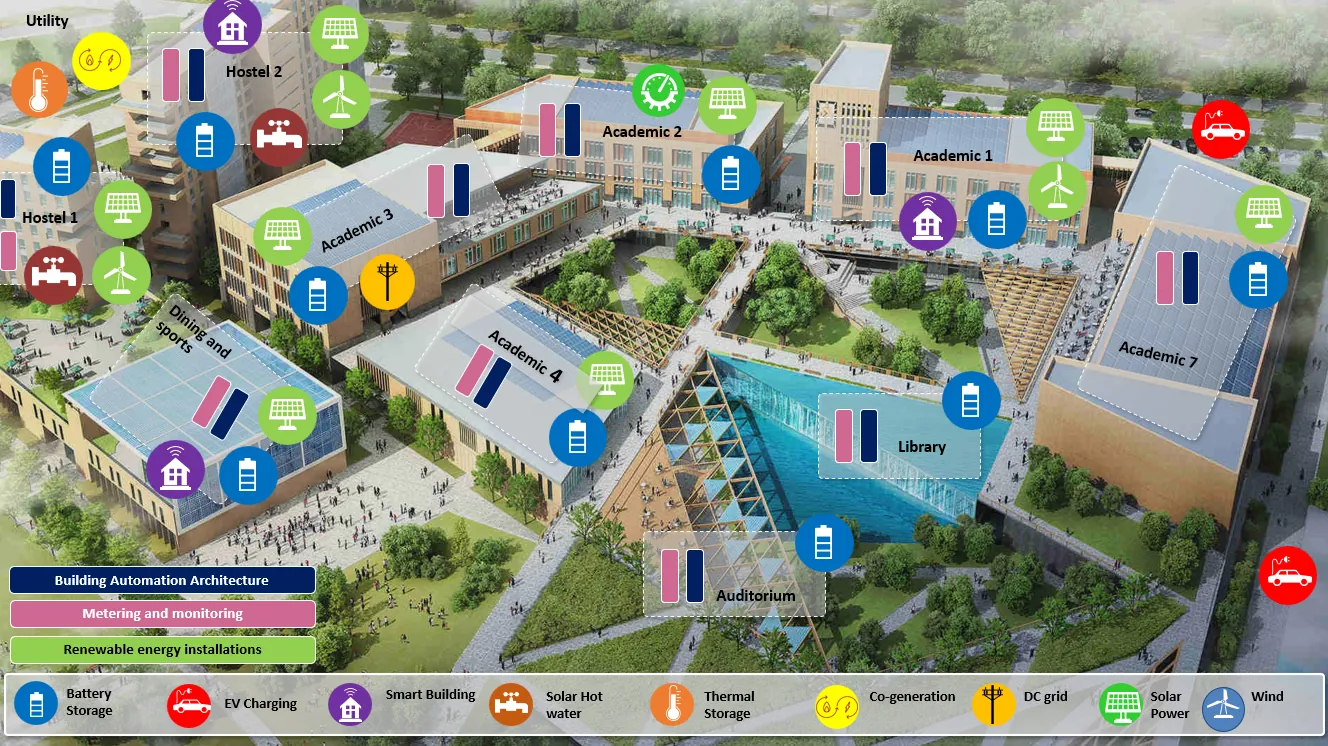
Beyond infrastructure, the microgrid will anchor training for campus, building and large-facility energy managers in data analytics, AI, machine learning and IoT, contributing to national decarbonisation goals and a digital public infrastructure for the power sector.