
Decarbonizing residential cooling
Air conditioning is the fastest growing electricity load in Indian homes, and it peaks at night when there is no sun. We test how district cooling and thermal storage can shrink the capacity homes need and run night-time cooling on daytime solar.
Residential air conditioning creates two problems at once. Demand peaks late in the evening, after solar power has gone, so it is met by fossil power. And every home buys an air conditioner sized for the hottest hour of the year, which means the country installs far more cooling capacity than it ever uses at the same time.
Our approach
Central plants that serve many homes together can be sized for the real combined peak, not the sum of every room. Add thermal storage, and the cooling made with cheap daytime solar can be saved for the night. We study both, using real operating data.
- Evidence from the field. A case study of a 387-home district cooling system in Hyderabad showed installed capacity could fall by up to 90%.
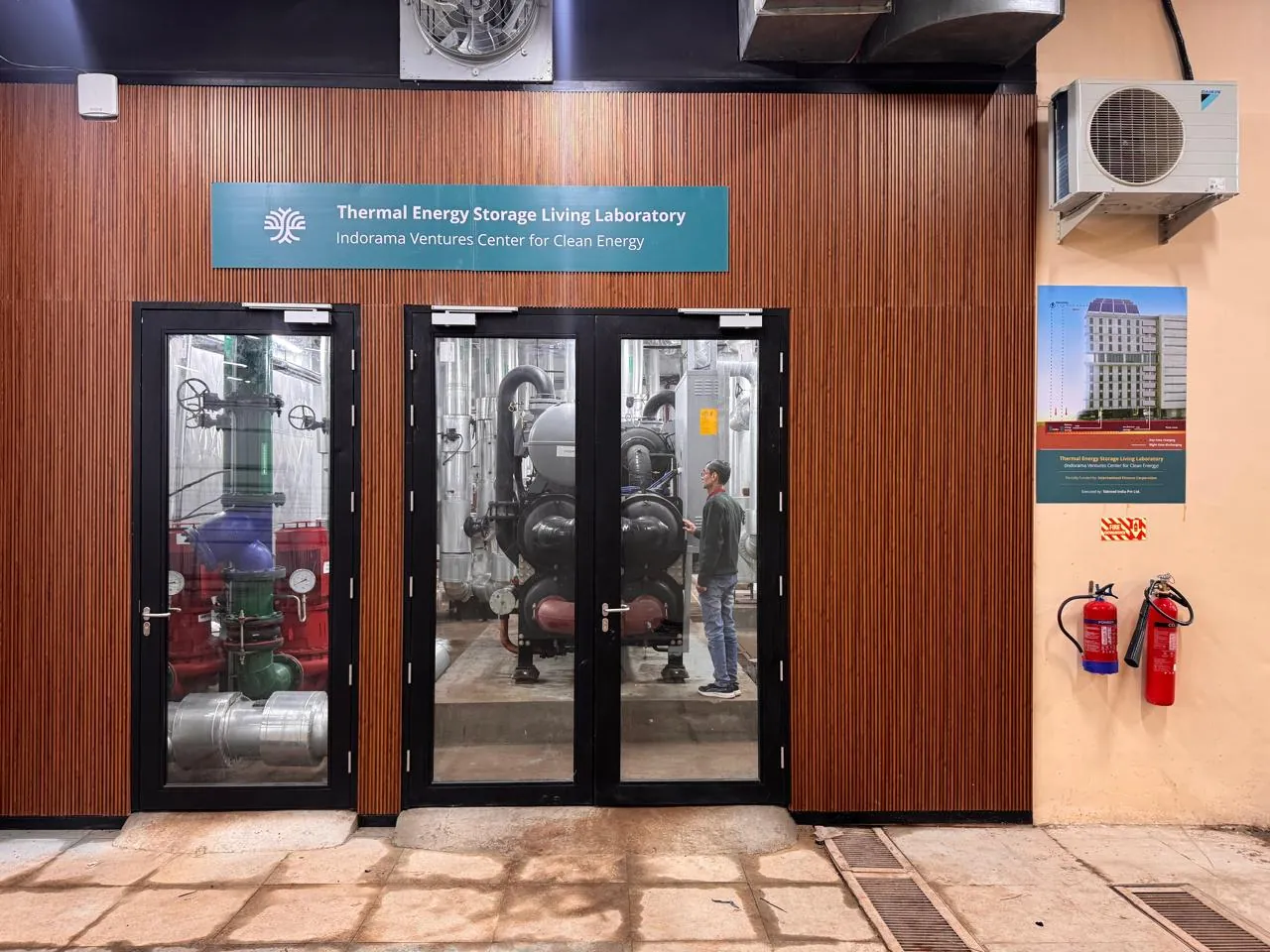
- A living lab at full scale. Our Thermal Energy Storage Living Lab is India's largest academic research testbed of its kind, cooling a 220-room hostel at night.
- New materials. We are developing phase-change materials in-house, and testing how PCM balls charge and discharge.
- Standards. The data we collect will support national standards for thermal storage and climate-specific efficiency ratings for air conditioners.
Projects
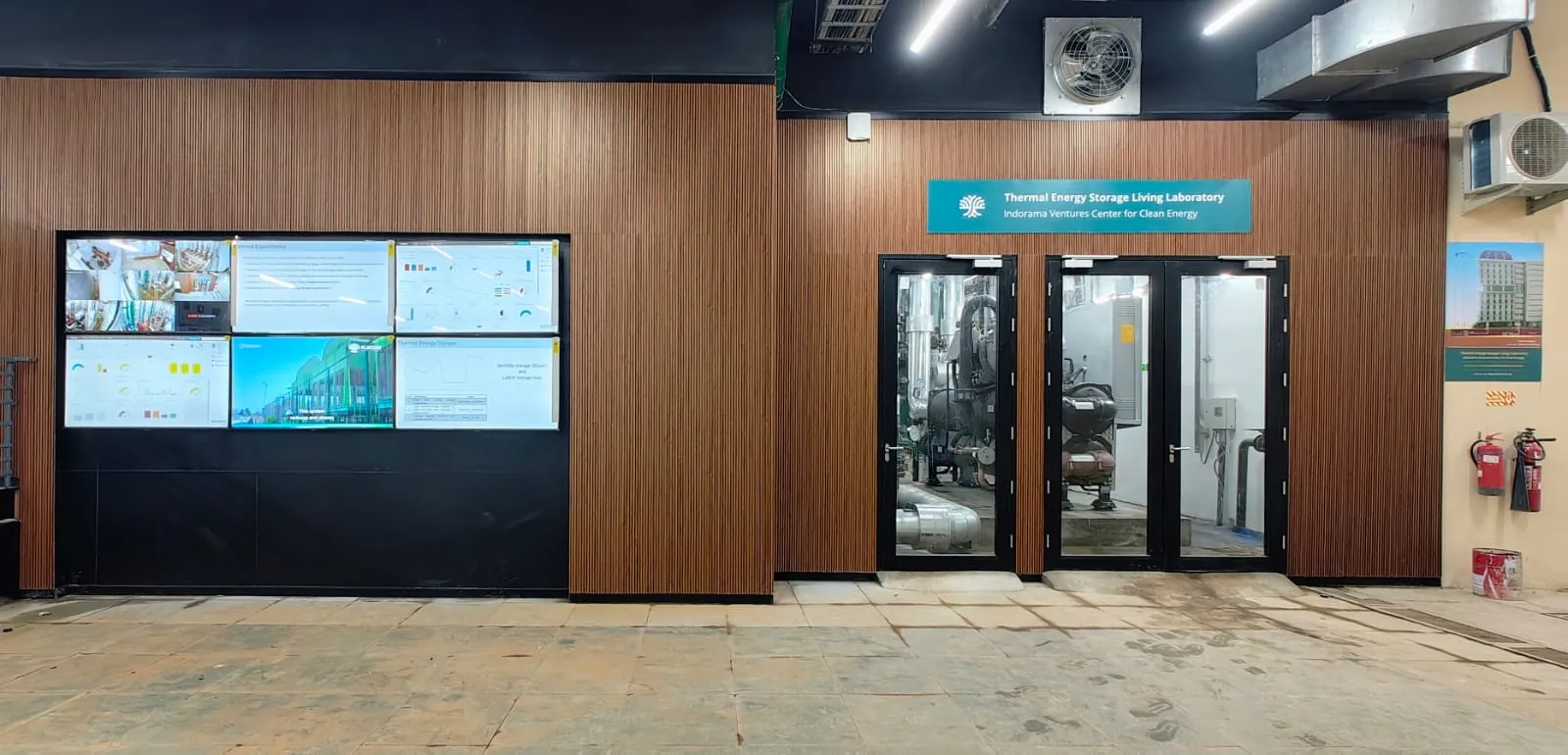
Thermal Energy Storage Living Lab
India's largest academic research testbed for thermal storage, cooling a 220-room hostel at night with energy stored by day.
District cooling for homes
Operational data from 387 homes in Hyderabad shows district cooling can cut installed cooling capacity by up to 90%.