
Smart buildings
Homes and offices use more electricity every year as new devices arrive. We study how technology, people and indoor air interact, so buildings can use less energy while staying healthy and comfortable.
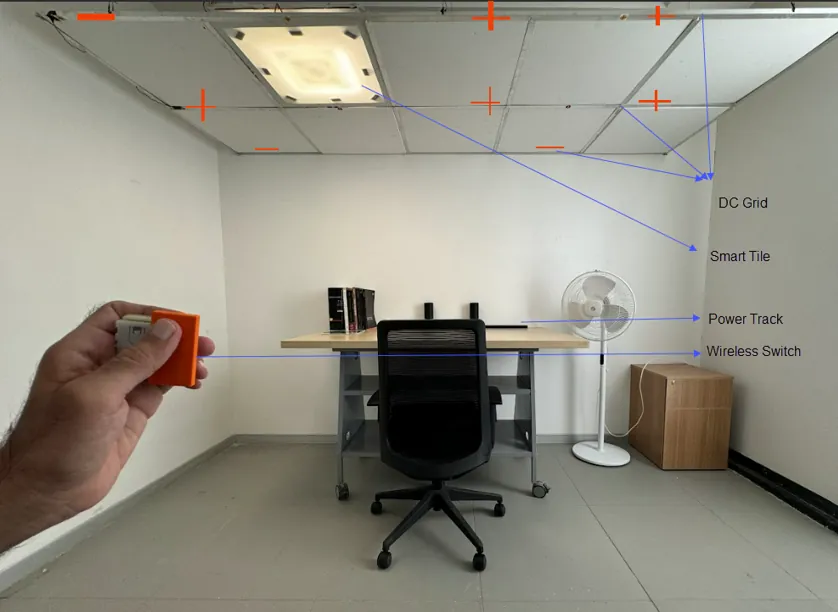
Electricity demand from residential and commercial buildings is rising fast, driven by more devices in every home and new technologies arriving every year. How much energy a building really uses depends on more than its equipment. It depends on when people open windows, how they react to pollution, and which appliances they switch on.
What we study
- Where the electricity goes. Appliance-level monitoring of real homes, and a machine learning simulator that generates realistic household demand data for India.
- Air quality and energy together. Field studies and simulations of how pollution changes ventilation habits, purifier use and cooling energy in Delhi-NCR.
- New building technology. A DC ceiling grid that powers lights and devices from ceiling rails, controlled by wireless switches.
- Codes and standards. Contributions to India's Energy Conservation and Sustainable Building Code and to building performance metrics.
Our long-term goal is evidence that feeds into national standards for smart homes: better building performance, lower energy use and healthier indoor air.
Projects
Smart DC ceiling
Lights and devices that clip into powered ceiling rails, with wireless switches and no conventional wiring.
Household energy use
Appliance-level monitoring of real homes, and a machine learning simulator that generates realistic electricity data for India.
Indoor air quality and energy
How pollution changes the way families ventilate and cool their homes, and what that costs in energy and exposure.
Building energy codes
Shaping India's Energy Conservation and Sustainable Building Code and new metrics for lighting performance.
Smart Home Living Lab
Fully working homes, packed with sensors and automation, to test building products and smart home technology.