Residential coolingCompleted
District cooling for homes
What happens when hundreds of apartments share one cooling plant instead of buying their own air conditioners? We studied a real residential district cooling system in Hyderabad to find out.
- Site
- 387-home residential complex, Hyderabad
- Data
- Three months of operating data, across seasons
- Used in
- India's district cooling guidelines
The complex gets chilled water from a central district cooling system. We analysed its operating data across different seasons to understand how residents actually use air conditioning, and how much cooling capacity the complex really needs.
387Homes studied
Up to 90%Less installed cooling capacity
3 monthsOf operating data, across seasons
What we found
- Because homes do not all cool at full load at the same time, the real combined peak is a small fraction of the capacity that individual air conditioners would add up to. District cooling can reduce installed capacity by up to 90%.
- Residential air conditioning runs mostly at night. In a related study of household load profiles, use peaked around 11:30 pm, when solar power is not available.
- That night-time demand can be met with thermally stored energy made with daytime solar power.
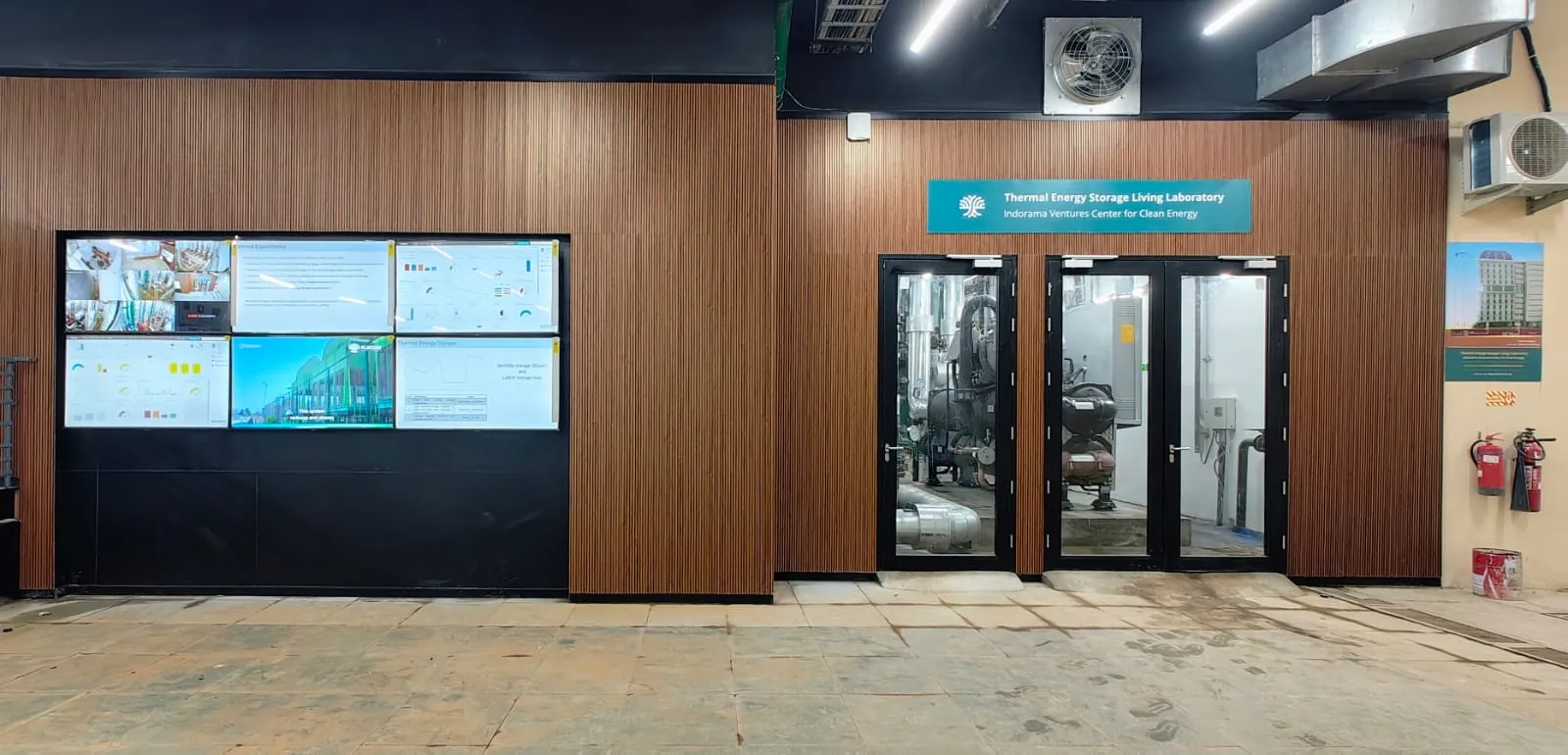
Our case study was included in India's district cooling guidelines. It also led directly to our Thermal Energy Storage Living Lab, where we are testing the idea at full scale.