
Thermal Energy Storage Living Lab
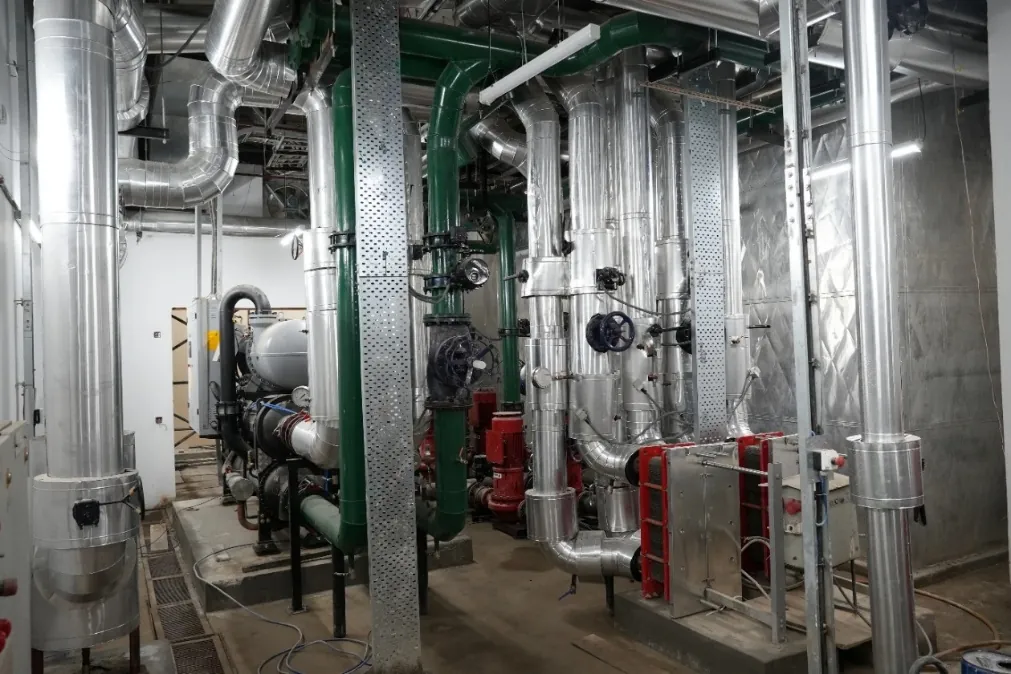
India's largest academic research testbed of thermal energy storage, coupled with a central chilled-water cooling system. It stores cooling during the day and delivers it to a 220-room hostel at night.
- Storage
- 5,600 kWh
- Serves
- 220-room hostel, night-time cooling
- Supported by
- International Finance Corporation (IFC), World Bank Group
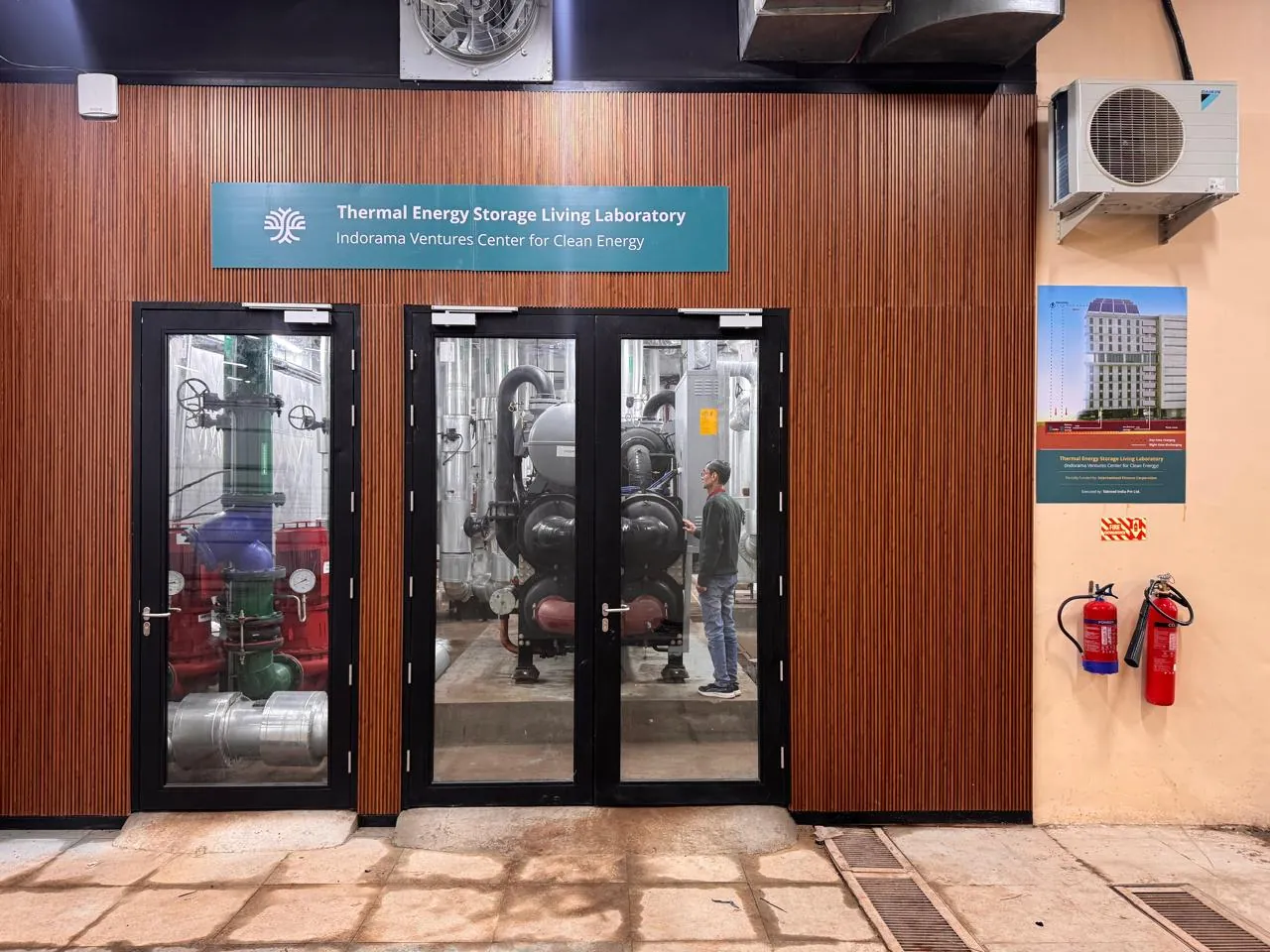
A case study of a 387-home complex in Hyderabad showed that district cooling can reduce installed cooling capacity by up to 90%, and that night-time demand can be met with energy stored using daytime solar power. To test this at full scale, we built the Thermal Energy Storage (TES) Living Lab, integrated with the campus district cooling system, with partial financial support from the International Finance Corporation (IFC), World Bank Group.
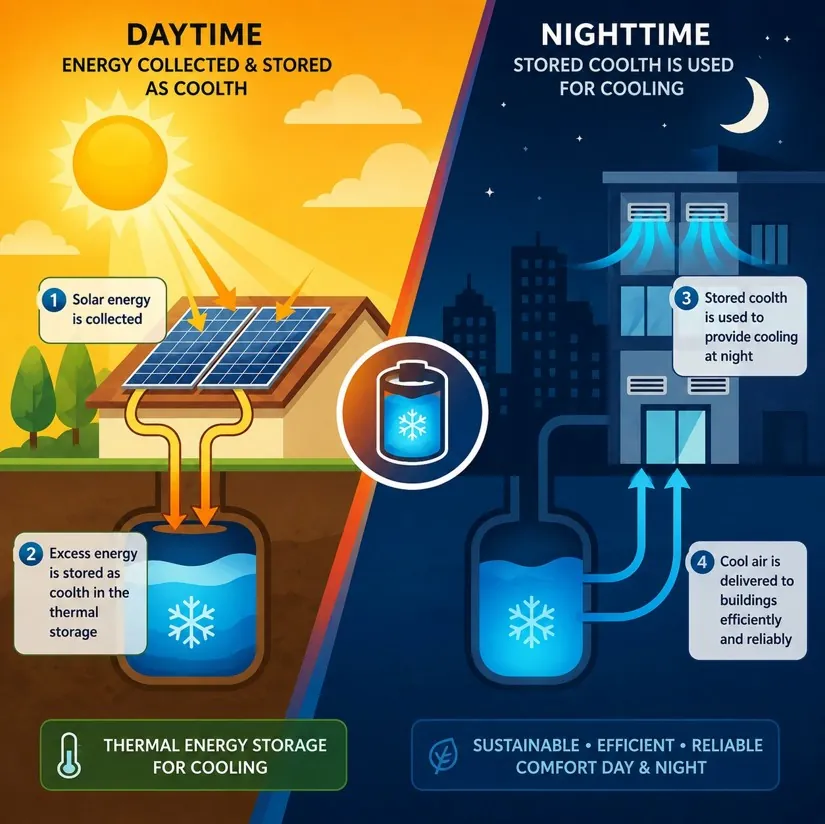
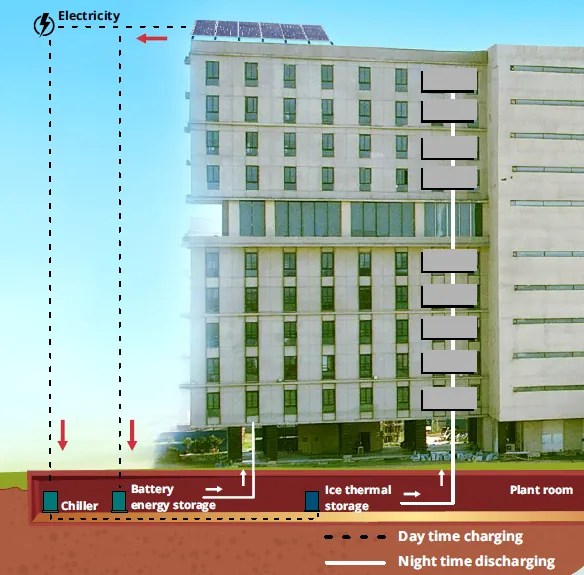
How it works
During the day, a chiller running when solar power is available charges the thermal store. At night, the stored cooling is discharged through the chilled-water network to the hostel's rooms, so the building stays cool without running chillers on evening grid power.
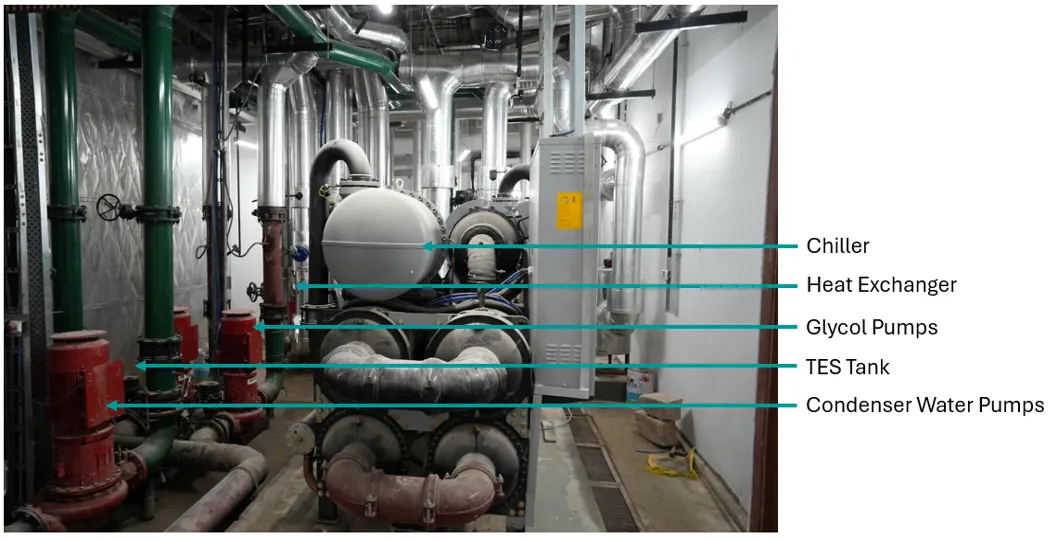
What we are learning
The system is now in the monitoring, verification and performance optimisation stage. So far we have:
- Run multiple charge and discharge cycles under different summer conditions
- Compared charging strategies and their effect on storage capacity, charging completeness, cooling delivery and discharge duration
- Identified operating strategies for future summers through repeated trials
- Built a separate setup to study how phase-change material (PCM) balls charge, alongside in-house PCM development
Current research covers performance evaluation, cost-benefit analysis, round-trip efficiency, AI-based operational optimisation and user adoption studies.
Why it matters
The lab generates real-world evidence on thermal storage under Indian conditions: load shifting, peak demand reduction, energy efficiency and lower reliance on high-GWP refrigerants, along with behavioural, economic, social and environmental assessments. It will support national thermal storage standards and show how district cooling with storage can scale across Indian cities.