
Building energy codes
National building codes decide how millions of square metres of new buildings will perform for decades. We contribute research and leadership to the committees that write them.
- Codes
- ECSBC 2024, ISHRAE IIBEPS
- Role
- Chair of the lighting and controls sub-committee
- With
- Bureau of Energy Efficiency, ISHRAE
Energy Conservation and Sustainable Building Code
The Energy Conservation Building Code, developed by the Ministry of Power and the Bureau of Energy Efficiency (BEE), sets energy performance norms for building components. Its 2024 revision, the Energy Conservation and Sustainable Building Code (ECSBC), adds a stronger focus on sustainability and, for the first time, indoor environmental quality.
- Our Director chairs the sub-committee that revised the chapter on lighting and controls, and an IVCCE researcher serves as a member.
- We contributed to the updated envelope reflectivity requirements for the standard design case, and ran simulations to validate a new coefficient for modelling variable refrigerant flow systems.
- We contributed to the chapters on indoor environmental quality and sustainable sites, recognising the role of lighting in comfort and light pollution.
Our team has also presented ECSBC 2024 to practitioners during the IGBC Green League 2025.
ISHRAE Indian Building Energy Performance Standard
For ISHRAE's IIBEPS, our members introduced a new metric for measuring and assessing lighting energy performance. Together with wider use of occupancy and daylight sensors, it is expected to lower energy use and improve efficiency in Indian buildings.
Climate-specific efficiency ratings
We are also developing a climate-specific Seasonal Energy Efficiency Ratio (SEER) approach for India, so air conditioner ratings reflect the climates they actually run in.
More in smart buildings
Smart buildings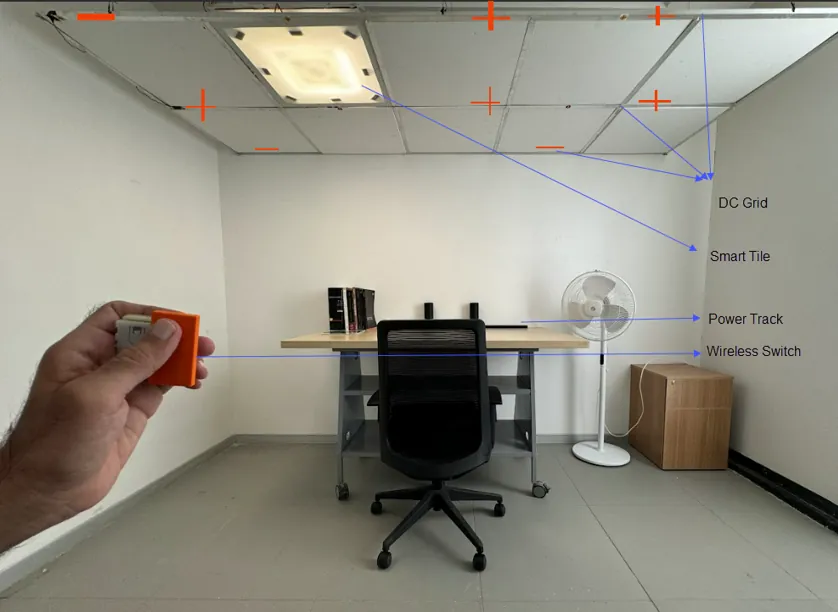
Smart DC ceiling
Lights and devices that clip into powered ceiling rails, with wireless switches and no conventional wiring.
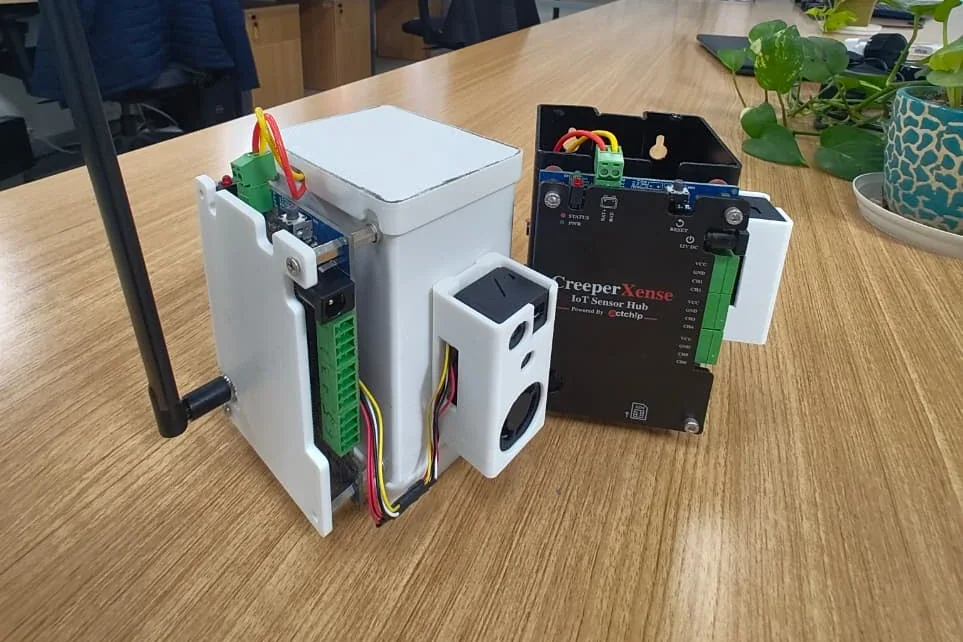
Household energy use
Appliance-level monitoring of real homes, and a machine learning simulator that generates realistic electricity data for India.
Indoor air quality and energy
How pollution changes the way families ventilate and cool their homes, and what that costs in energy and exposure.