
Household energy use
Good policy for homes needs good data on how homes actually use electricity. We monitor real households appliance by appliance, and build models that can generate realistic data where none exists.
- Monitoring
- Smart plugs, smart meters, temperature and humidity sensors
- Simulator data
- 65 homes, 7 residential categories, 1 year
- Best model
- Bidirectional LSTM
Appliance-level electricity use in a home
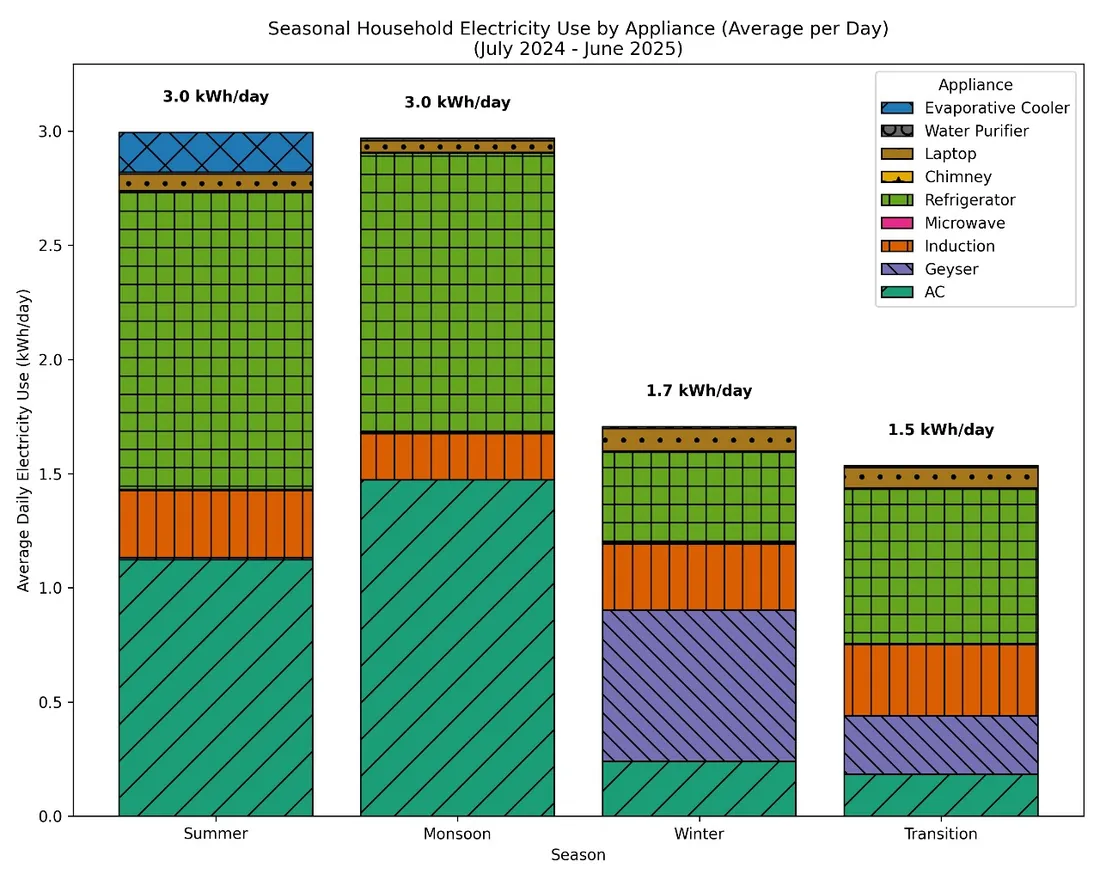
We followed one household in Mohali for 12 months, from July 2024 to June 2025, using smart plugs, a smart meter and indoor temperature and humidity sensors. The air conditioner, geyser, induction cooktop and refrigerator accounted for most of the electricity used.
Usage tracked the weather closely: the air conditioner ran in hot and humid conditions, the geyser in cold weather and the evaporative cooler in hot and dry weather. Daily peaks followed bathing and cooking routines, sharper on weekdays and more flexible at weekends. Indoor conditions stayed mostly within India-specific adaptive comfort limits, showing that season-aware, manual control of appliances, without any automation, can keep energy use low without giving up comfort.
Simulating household electricity use
High-resolution data on household electricity use is scarce in India. Our Residential Electricity Usage Simulation (REUS) approach generates realistic synthetic datasets. It learns from a year of hourly data from 65 households across seven residential categories, with 18 socio-technical features per home.
We combined probabilistic finite state modelling, feature selection and machine learning, and benchmarked LSTM and Transformer models against Markov chains and ARIMA. Bidirectional LSTM models captured household patterns best, with the lowest prediction errors. Region-specific synthetic data can support energy research, planning and policy without costly and intrusive data collection.
Earlier findings
- In 20 households in Hyderabad, air conditioners, geysers, refrigerators and washing machines used about 60% of daily electricity.
- A survey of 425 residents of Mumbai found high willingness to adopt smart home technology. More than 40% named security as their top priority, and data privacy was the biggest concern.
- A WhatsApp-based nudging app that encourages energy-saving behaviour is being developed and tested by our students.
More in smart buildings
Smart buildings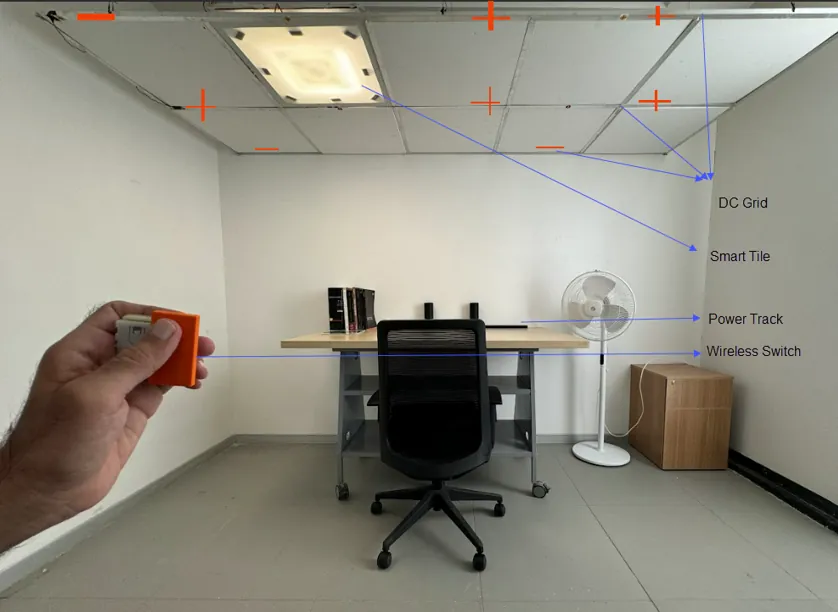
Smart DC ceiling
Lights and devices that clip into powered ceiling rails, with wireless switches and no conventional wiring.
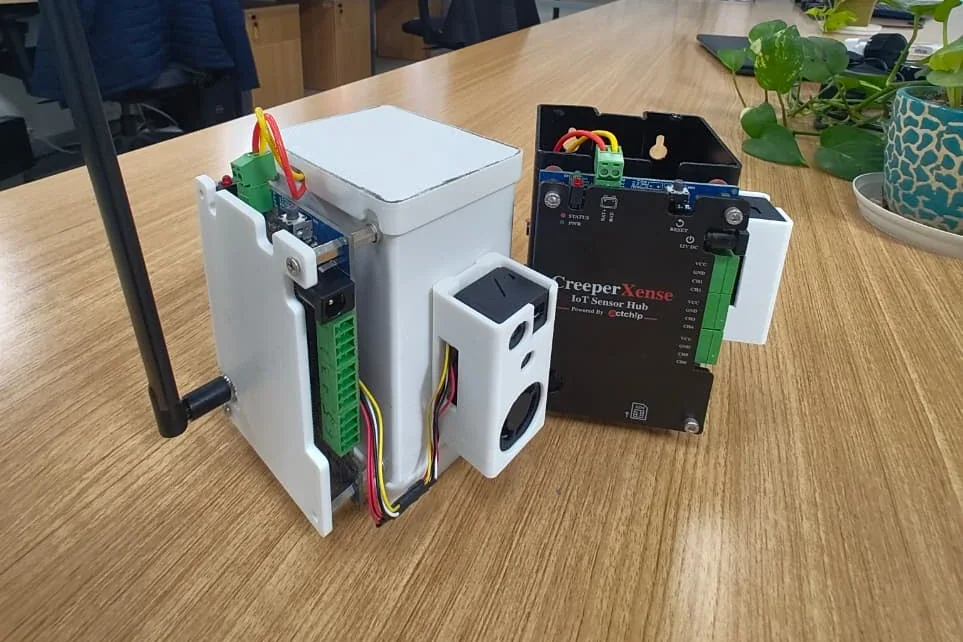
Indoor air quality and energy
How pollution changes the way families ventilate and cool their homes, and what that costs in energy and exposure.
Building energy codes
Shaping India's Energy Conservation and Sustainable Building Code and new metrics for lighting performance.