
Indoor air quality and energy
In polluted cities, keeping windows shut and running purifiers protects people indoors but costs energy. We measure these trade-offs through interviews, field monitoring and building simulation in Delhi-NCR.
- Region
- Delhi-NCR
- Field studies
- 10 homes in Diwali and winter; 20 homes in an urban-poor settlement
- Methods
- Interviews, sensors, EnergyPlus simulation
What people know and do
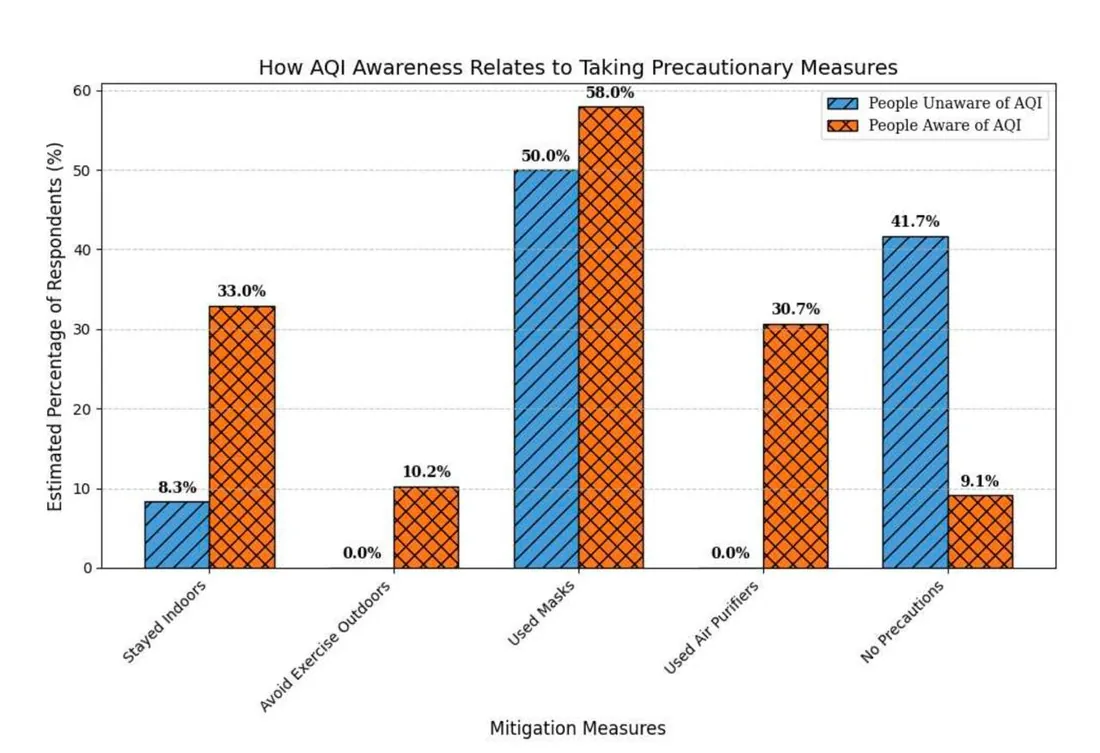
In-person interviews across Delhi-NCR, covering a range of socio-economic backgrounds, found that 88% of respondents knew about the Air Quality Index, but only 33% understood PM2.5 and its health risks. People aware of AQI were the ones who used air purifiers, while masks were used widely regardless of awareness. Among people without a purifier, 40% cited limited awareness of indoor air quality, or doubts about how well purifiers work. Younger, educated residents were more likely to consider moving to a less polluted city.
Windows, pollution and cooling energy
We built a pollution-aware ventilation schedule by combining hourly outdoor PM2.5 and PM10 data with EnergyPlus simulations of a typical Delhi-NCR apartment. Interviews showed that people often close windows based on perceived pollution, not measured levels, which increases reliance on mechanical cooling.
Purifiers or ventilation?
For a residential building in New Delhi, we compared pollution-aware natural ventilation with portable air cleaning plus temperature-based window use.
The results put a number on the energy cost of common ways to reduce exposure, and highlight a wider tension between private household spending on protection and public action on pollution at the source.
In the field
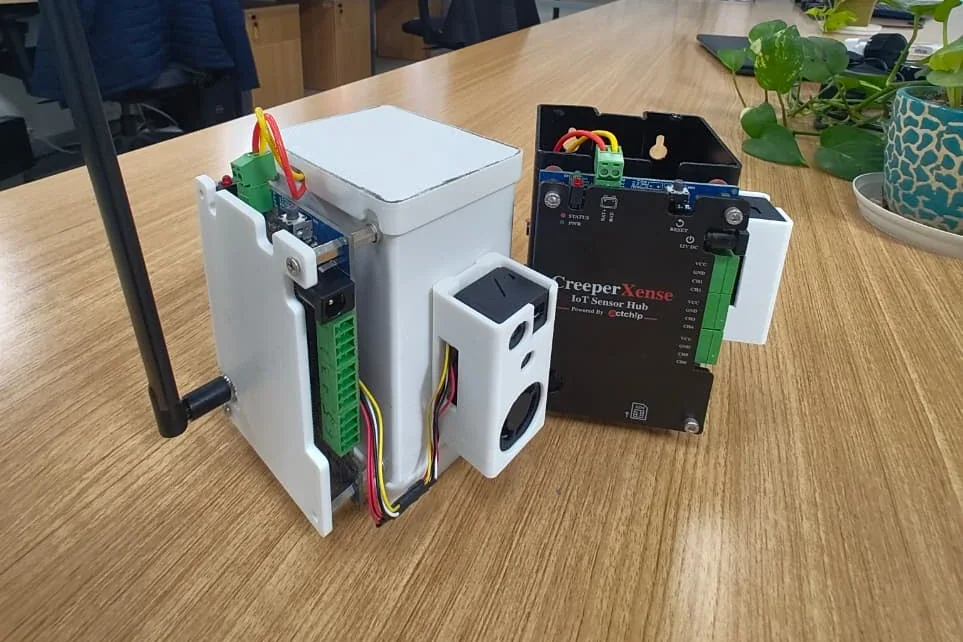
We studied indoor air quality in 10 homes in the NCR during Diwali and winter, and continuously monitor 20 homes in an urban-poor settlement in Delhi-NCR using our custom sensor hubs.
More in smart buildings
Smart buildings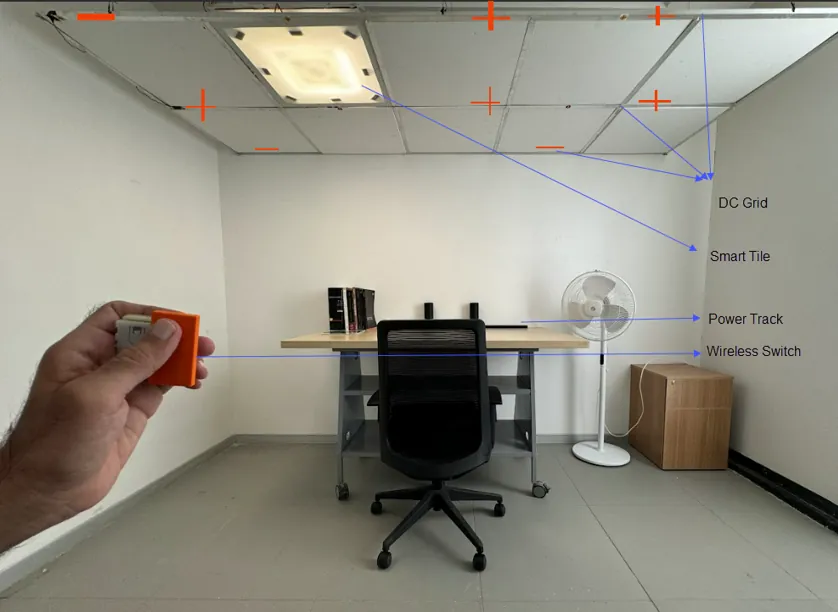
Smart DC ceiling
Lights and devices that clip into powered ceiling rails, with wireless switches and no conventional wiring.
Household energy use
Appliance-level monitoring of real homes, and a machine learning simulator that generates realistic electricity data for India.
Building energy codes
Shaping India's Energy Conservation and Sustainable Building Code and new metrics for lighting performance.