
Walkability and Project Sidewalk
Manual street surveys are slow and expensive. We built automated pipelines that estimate where people need to walk and assess the state of sidewalks from satellite and street-view imagery.
- Partners
- University of Washington, Seattle; Jana Urban Spaces
- Scheme
- CM-GRIDS, Government of Uttar Pradesh
- Scale
- 200+ km of roads across 17 municipal corporations
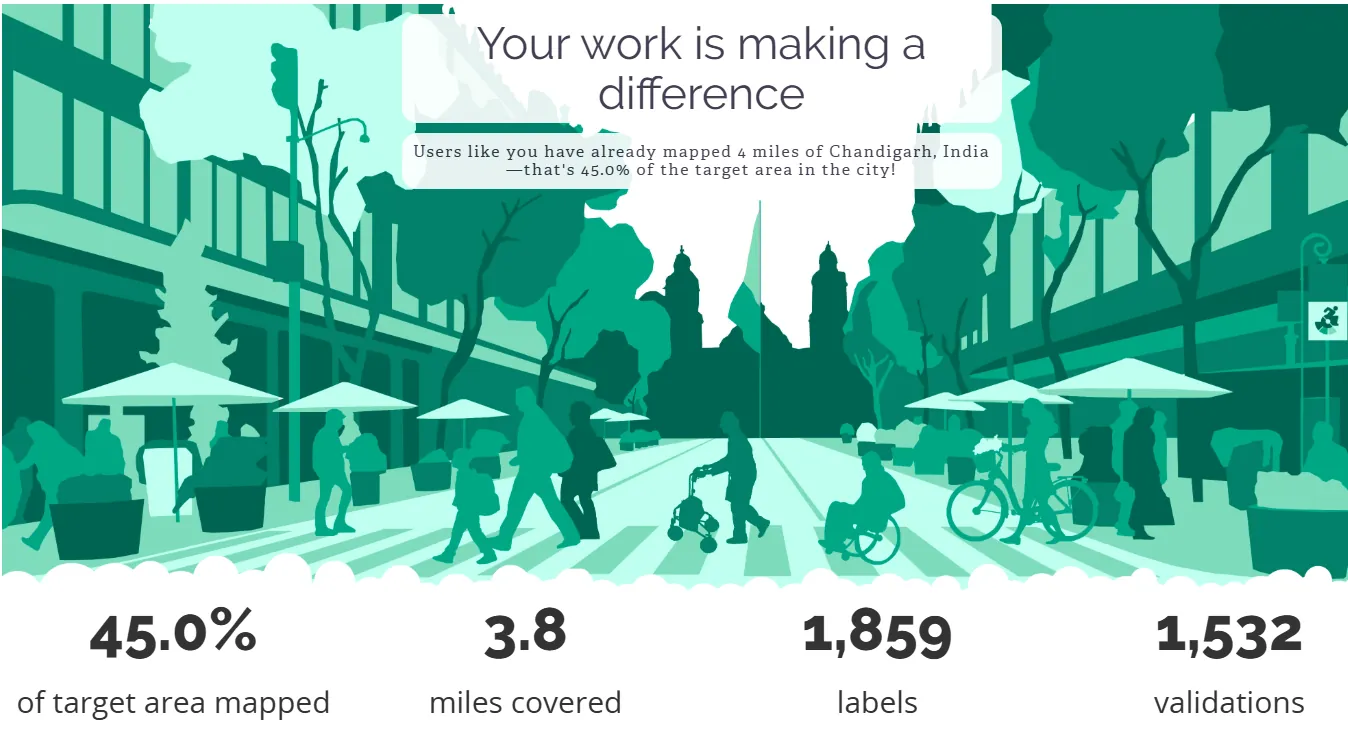
Our pipelines estimate walking demand from land-use patterns, then assess existing infrastructure using satellite and street-view images. City agencies can use the results to decide where new pedestrian infrastructure is most needed, and to check how well existing footpaths serve people.
Project Sidewalk Chandigarh
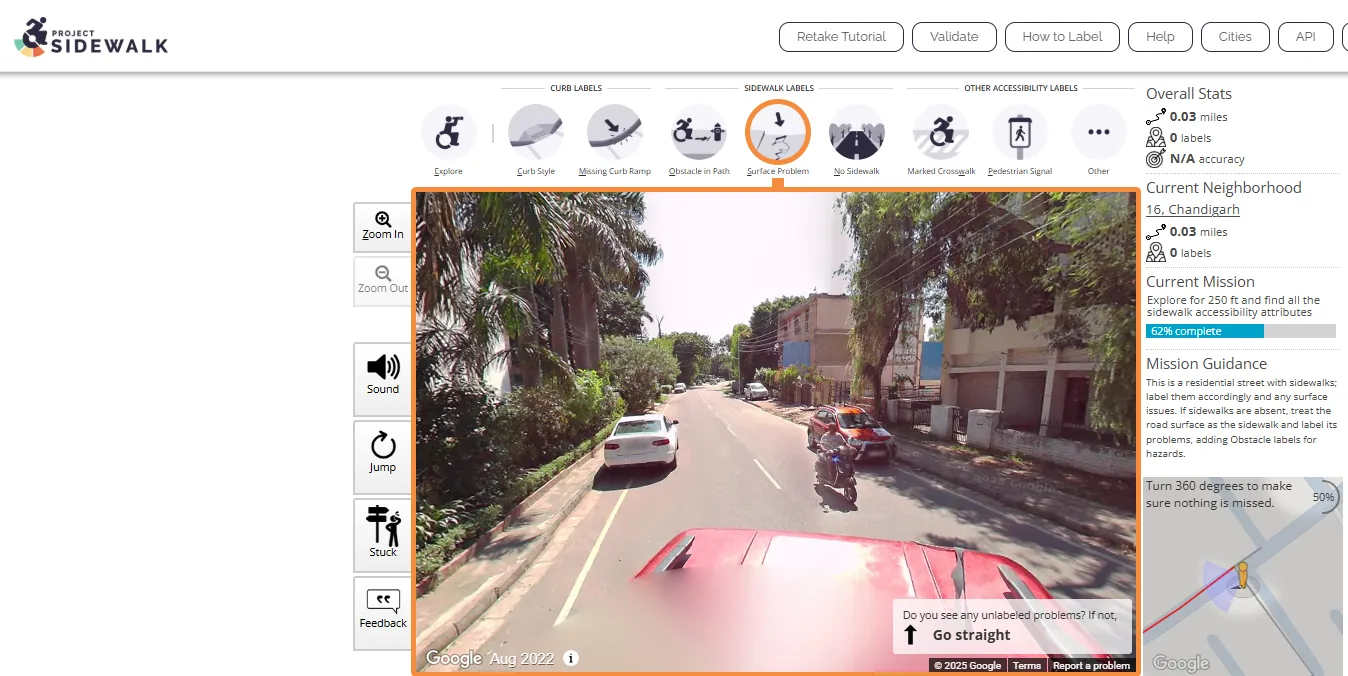
With the University of Washington, Seattle, we brought Project Sidewalk to Chandigarh. Anyone can help by virtually walking the city's streets and labelling sidewalk problems, such as missing curb ramps or obstacles, which builds an accessibility map of the city.
The work is complemented by city-scale tree mapping using computer vision, which helps us understand urban microclimates and walking comfort. Forest departments in Chandigarh and Delhi have shown active interest.
From research to roads
With Jana Urban Spaces, we support the Chief Minister Green Road Infrastructure Development Scheme (CM-GRIDS) of the Government of Uttar Pradesh. The programme is developing more than 200 km of pedestrian-friendly roads across 17 municipal corporations.
Our contribution is open-source software for street selection and design assistance, and a WhatsApp-based tool for data collection and guideline support. Field visits in Ayodhya, Lucknow and Delhi have shaped both the design process and how it is rolled out. The tools serve the Project Management Unit in the Directorate of Urban Local Bodies, road consultants, contractors and officials, and the public benefits through safer, greener streets.
More in urban microclimate
Urban microclimate
Cool roof policy
Technical support that helped Telangana, Andhra Pradesh and Uttar Pradesh adopt cool roofs and treat heatwaves as a disaster.
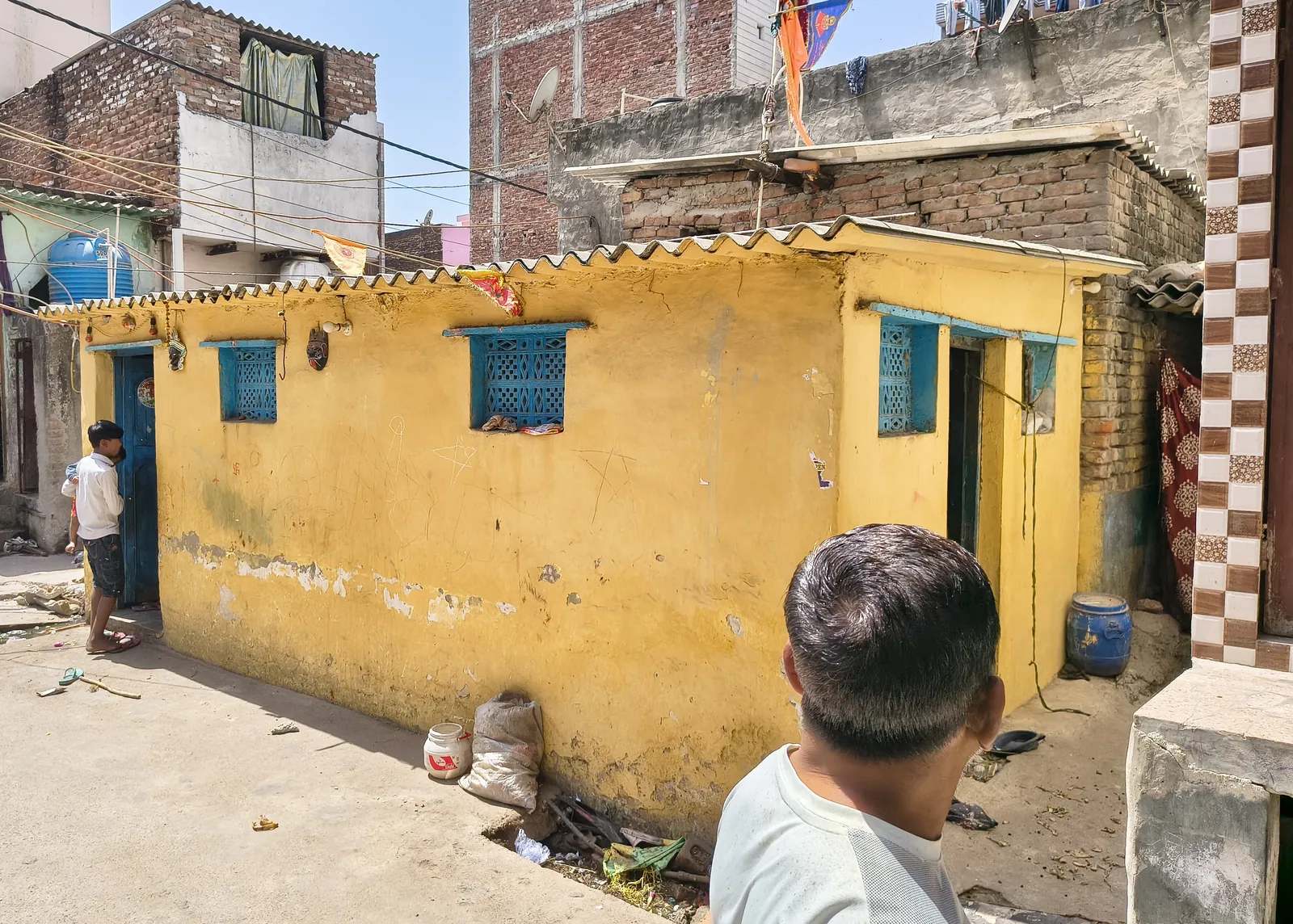
Roof of Hope
Reflective roofs for homes in a low-income settlement in Delhi, cutting roof temperatures by up to 20 °C.
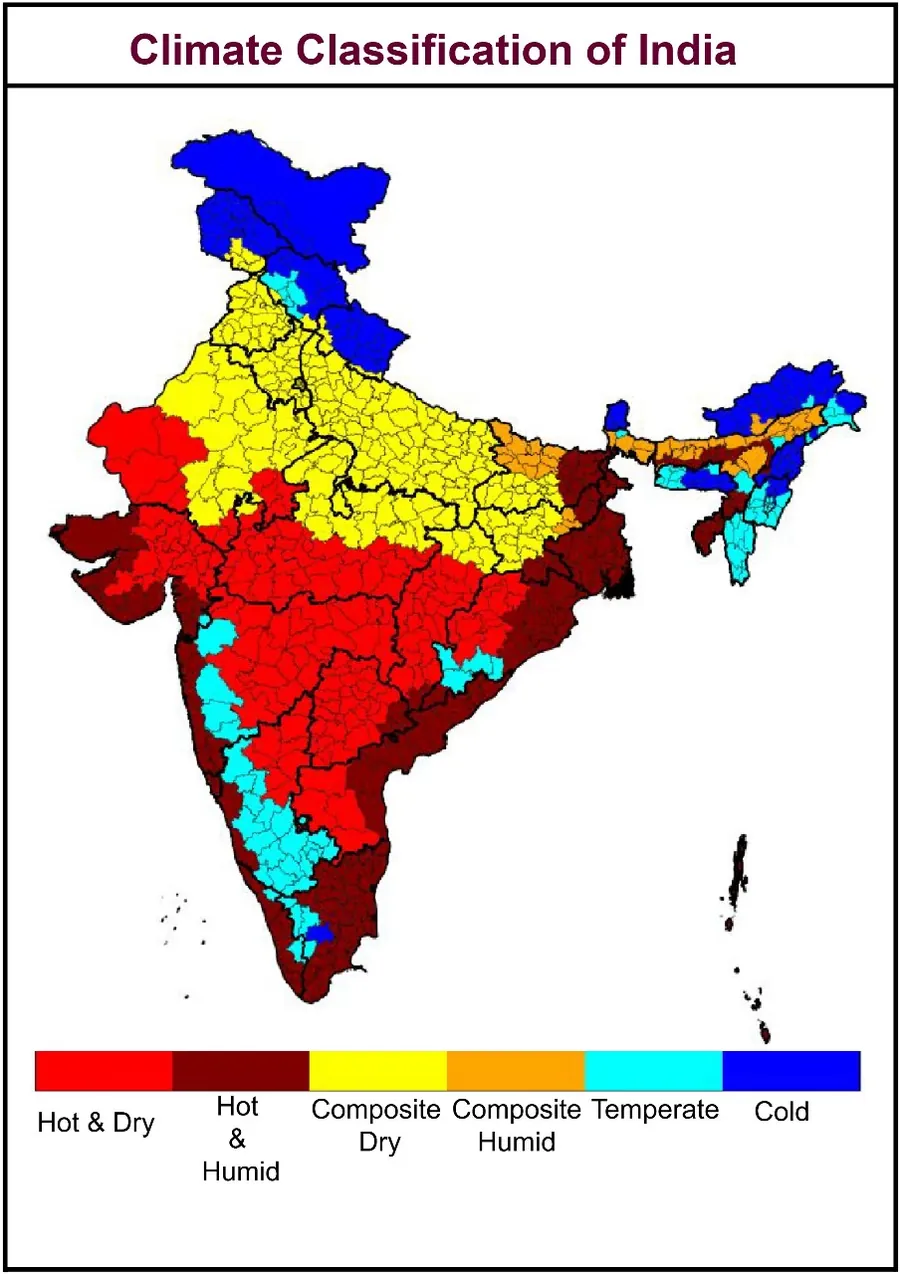
Climate zones for Indian districts
A new climate classification for every district in India, built for building energy performance.